
When Capitalism Fails: What the World’s Greatest Engine Doesn’t Tell Investors
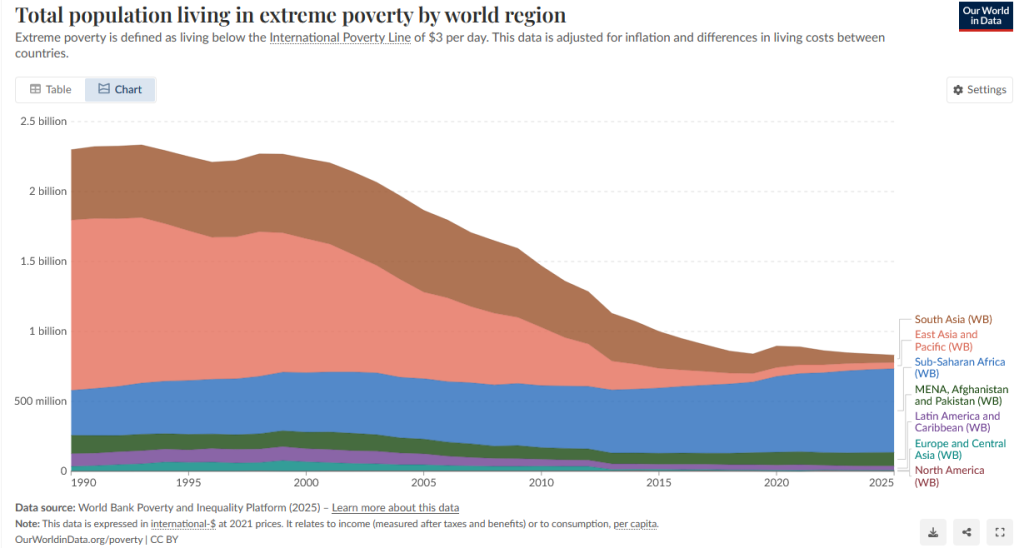
Capitalism has lifted more people out of poverty than any other economic system in history. The Communist Party of China proved this. While maintaining its communist political structure, China embraced capitalistic market reforms in the late 1970s. According to the World Bank, those reforms helped more than 800 million citizens escape poverty — the largest economic transformation ever recorded. Yet despite all its success, capitalism is not flawless.
Capitalism is an efficient economic system because it works directly off consumer needs and delivers supply where there is demand in pursuit of profit. The question is not whether capitalism works, but when and why it fails. As a lifelong believer and participant in capitalism, I have started four profitable companies. Beginning at age nine, I mowed every lawn in my neighborhood for $3 a yard. How else was I going to buy that Schwin Stingray bike with butterfly handlebars and a banana seat? That same yard today may pay $50, yet many young people seem reluctant to embrace this type of entrepreneurship. Perhaps this is because the youth do not yet recognize the difference between capitalism’s virtues and vices.
Consider tobacco, for example. In the 1500s tobacco was considered harmless and even prescribed by physicians to ease headaches and calm patients. By the 1930s, researchers such as our own Alton Ochsner uncovered evidence linking tobacco to cancer. Competing arguments clashed for decades: the industry insisted on safety, while science revealed the risks. Eventually, the truth prevailed — tobacco causes cancer. So how does the industry still thrive worldwide as a $912‑billion enterprise employing thousands while supplying a harmful product? Here capitalism shows its blind spot: it responds to demand, not morality. It is only if the demand declines that capitalism kicks in and brings down the supply.
This pattern repeats elsewhere but with different outcomes. Kodak dominated the photography industry for eighty years but failed to adapt to the new digital technology, ironically invented by one of its own engineers. Although the product was not harmful, when the demand dried up capitalism punished the company with bankruptcy. In contrast, the tobacco industry survives because the demand persists even though the product is harmful. Capitalism can be brutally efficient, but it is not a moral compass.
Government intervention has good intentions but fails to protect consumers as well. The first narcotics act passed in 1914 and with the Controlled Substances Act of 1970 sought to curb drug abuse. Yet according to the National Center for Health Statistics drug overdoses claimed 80,391 lives in the USA last year, double automobile fatalities, and is a leading cause of death in ages 18 to 44. Even with a US aircraft carrier positioned in the Caribbean, the illegal drug trade continues because the demand continues. There are many other examples like this such as Prohibition enacted in 1920. Government intervention failed again and it was repealed in 1933 when public demand won and capitalism delivered the supply without any ethical judgement. When demand is strong, capitalism operates in the gap and will go wherever the money flows. Ultimately, the responsibility lies with each of us to make wise choices and demand beneficial products that shape a healthier future. If we do, capitalism will be more than happy to provide them.
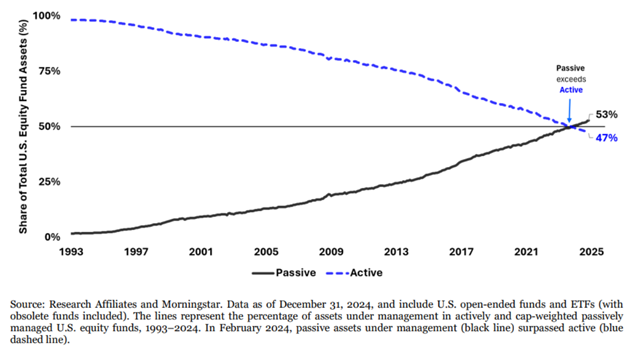
As wealth advisors, we must apply this same supply-and-demand logic to the stock market itself. In an ideal world, a company’s stock price would perfectly reflect its earnings and fundamental value. However, popular demand for stocks often pushes prices faster and higher than efficiency alone would suggest. Today, the market is increasingly driven by “Technical Demand” rather than “Fundamental Value.” This shift is fueled by passive fund flows, where trillions of dollars automatically buy the largest stocks simply because they are already large. When you add the influence of retail investors and algorithmic traders who buy based on mathematical patterns, the “technicals” become more important than ever. Some studies now suggest that these technical flows can impact stock prices more than the actual profits of the company.
Looking back at 2025, we saw this momentum in action across all major asset classes. It was a year of resilience where boring metals like gold and silver were the standout winners, returning roughly 64% and 145% as investors sought safety. International developed and emerging markets surprised many with +30% returns, finally breaking a long streak of lagging behind the United States. The U.S. S&P 500 remained robust with an 18% gain led by the continued expansion of artificial intelligence. Meanwhile, cash and treasuries provided a modest 3.5% anchor, and real estate struggled under the weight of high interest rates, returning just under 3%. This “everything rally” was a testament to the market’s ability to find growth even in a high-rate environment.
As we enter 2026, the prevailing theme is one of continued US Excellence. We expect American companies to remain global leaders in innovation, particularly as AI moves from a concept into a core driver of earnings. However, our fiduciary duty is to watch for changing tides. While we remain invested in these growth stories, we are carefully monitoring the technical signals alongside the fundamentals. When too much money flows into too few stocks, the market becomes vulnerable to shifts in sentiment. Our strategy is to embrace the power of the capitalistic engine while remaining vigilant of its blind spots.
In 2002, Equitas Capital Advisors, LLC was established as a unique company that blends the resources of a large global corporation with the flexibility of a small boutique firm. The registered service mark of Equitas Capital Advisors is Engineering Financial Solutions®and the purpose of Equitas is to design, build, and deliver investment solutions to meet the goals and objectives of our investors. Equitas Capital Advisors, LLC located in New Orleans, has over 200 years of combined investment management consulting experience providing professional investment management services to investors such as foundations, endowments, insurance companies, oil companies, universities, corporate retirement plans, and high net worth family offices.
Disclosures and Disclaimers:
Above information is for illustrative purposes only and has been obtained from reliable sources but no guarantee is made with regard to accuracy or completeness. This information including any specific securities mentioned is for educational, entertainment and illustrative purposes only and not a recommendation or solicitation to purchase or sell any individual security. You cannot invest directly in an index.
Equitas Capital Advisors, LLC is registered as an investment advisor with the U.S. Securities and Exchange Commission (“SEC”) and only transacts business in states where it is properly registered, or is excluded or exempted from registration requirements. SEC registration does not constitute an endorsement of the firm by the Commission nor does it indicate that the advisor has attained a particular level of skill or ability.
Information presented is believed to be factual and up-to-date, but we do not guarantee its accuracy and it should not be regarded as a complete analysis of the subjects discussed. All expressions of opinion reflect the judgment of the author on the date of publication and are subject to change. This publication does not involve the rendering of personalized investment advice.
Past performance may not be indicative of future results. Therefore, no current or prospective client should assume that the future performance of any specific investment or strategy will be profitable or equal to past performance levels. All investment strategies have the potential for profit or loss. Changes in investment strategies, contributions or withdrawals, and economic conditions may materially alter the performance of your portfolio. Different types of investments involve varying degrees of risk, and there can be no assurance that any specific investment or strategy will be suitable or profitable for an investor. Charts and references to returns do not represent the performance achieved by Equitas Capital Advisors, LLC, or any of its clients.
Asset allocation and diversification do not assure or guarantee better performance and cannot eliminate the risk of investment losses. All investment strategies have the potential for profit or loss. There can be no assurances that an investor’s portfolio will match or outperform any particular benchmark.